AI in Smart Manufacturing: Best Practices and Proven Implementation Tips
For manufacturing professionals who have moved beyond initial pilots and proof-of-concepts, the challenge shifts from understanding what AI can do to maximizing its impact across complex production environments. After deploying your first predictive maintenance models or computer vision quality systems, you've likely encountered the messy realities that textbooks don't cover: data drift degrading model performance, integration headaches between AI platforms and legacy MES systems, and the organizational friction that emerges when autonomous systems challenge established workflows. The difference between incremental gains and transformational results lies not in the algorithms themselves, but in how systematically you apply proven practices to scale, optimize, and sustain your intelligent manufacturing capabilities.
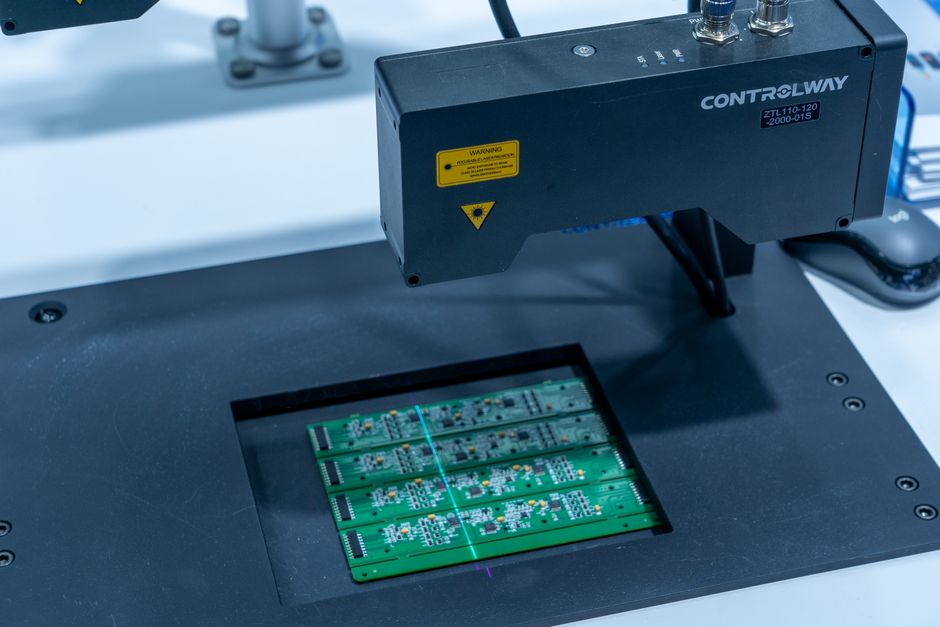
Organizations like Honeywell and Rockwell Automation that have successfully scaled AI in Smart Manufacturing share common patterns in their approach: they treat AI systems as living assets requiring continuous refinement rather than one-time deployments, they invest heavily in data infrastructure before algorithms, they establish clear governance around model performance and decision authority, and they build tight feedback loops between the AI systems and the domain experts who understand production realities. These aren't theoretical recommendations—they're hard-won lessons from practitioners who have shipped products, met customer commitments, and defended ROI in quarterly business reviews while navigating the practical complexities of intelligent automation at scale.
Optimizing Data Architecture for Production-Grade AI
Your initial pilots likely got by with manually curated datasets and point-to-point integrations. Scaling AI in Smart Manufacturing demands a more robust foundation. The most successful implementations establish a unified data platform that serves as a single source of truth, with clear data lineage from IoT-enabled devices on the shop floor through edge processing layers to enterprise analytics systems.
Implement a data lakehouse architecture that combines the flexibility of data lakes with the governance and query performance of data warehouses. This lets you store raw sensor data at high fidelity for historical analysis while maintaining curated, validated datasets for production models. Tools that support both batch processing for model training and real-time streaming for inference are essential—your predictive maintenance models need millisecond latency for actual decision-making, not just retrospective analysis.
Establish data quality monitoring that automatically flags anomalies, missing values, and drift in statistical properties. When a temperature sensor starts reporting implausible values or a pressure transducer goes offline, your AI systems should degrade gracefully rather than producing garbage predictions that erode user trust. Build automated data validation into your pipelines, with clear escalation paths when quality thresholds are breached.
Model Lifecycle Management: From Training to Retirement
One of the biggest gaps between pilot projects and production systems is rigorous model lifecycle management. In pilots, data scientists manually retrain models when performance degrades. At scale, you need automated systems that monitor model performance continuously, trigger retraining when accuracy falls below thresholds, validate new models against production data before deployment, and maintain version control with the ability to roll back if issues emerge.
Implement A/B testing frameworks that let you compare new model versions against current production models using real data before full cutover. For critical applications like quality inspection or process control, run shadow mode deployments where new models generate predictions that are logged but not acted upon, allowing you to validate performance without risking production.
Establish clear ownership for each model in production—who monitors its performance, who authorizes retraining, who investigates when predictions deviate from expected patterns. Without this governance, models become orphaned as teams move on to new projects, and performance quietly degrades until a quality incident or production disruption forces reactive intervention.
Integrating AI with Manufacturing Execution Systems and ERP
The value of AI in Smart Manufacturing multiplies when insights flow seamlessly into the systems that drive production decisions. This means tight integration between AI platforms and your MES, ERP, CMMS, and other operational systems. Rather than treating AI as a separate analytics layer that generates reports for manual action, embed AI-driven decisions directly into production workflows.
For example, when your predictive maintenance models identify an impending bearing failure, that insight should automatically create a work order in your CMMS, check inventory for the replacement part, and if necessary, trigger procurement through your ERP system. It should also inform production scheduling, allowing your MES to route work to alternative equipment while the affected machine is serviced. These integrations require careful API design, robust error handling, and clear business logic about when AI recommendations should trigger automatic action versus alerting a human decision-maker.
Use event-driven architectures where state changes in production systems trigger AI analysis, and AI insights trigger appropriate responses across connected systems. This creates a responsive, intelligent ecosystem rather than a collection of disconnected tools that require manual coordination. Leveraging expertise in building AI solutions can significantly accelerate these complex integration efforts while avoiding common pitfalls.
Advanced Techniques for Predictive Maintenance Solutions
While basic predictive maintenance might use simple threshold monitoring or single-sensor analysis, advanced implementations employ sophisticated techniques that deliver step-change improvements in reliability and cost optimization.
Implement multi-modal fusion that combines vibration analysis, thermal imaging, acoustic monitoring, lubrication analysis, and process parameters into unified health models. No single sensor tells the complete story about equipment condition, but algorithms that synthesize multiple data streams can detect failure modes that individual sensors miss.
Move beyond predicting IF equipment will fail to predicting WHEN and WHY. Time-to-failure predictions allow precise scheduling of maintenance during planned downtime rather than emergency stops. Root cause identification guides technicians to the specific component requiring attention rather than generic "check pump" alerts that waste diagnostic time.
Implement remaining useful life (RUL) models that account for usage patterns, operating conditions, and maintenance history. A motor running continuously at steady load has different failure characteristics than one subjected to frequent starts, stops, and load variations. Models that incorporate these contextual factors deliver more accurate predictions than one-size-fits-all approaches.
Use reinforcement learning to optimize maintenance policies themselves—balancing the cost of preventive interventions against the risk of failures, considering inventory constraints, technician availability, and production schedules. Companies like Siemens have demonstrated that AI-optimized maintenance strategies can reduce total maintenance costs by 15-25% while improving equipment availability.
Scaling Manufacturing Digital Twins Across the Enterprise
Digital twin technology represents one of the most powerful applications of AI in Smart Manufacturing, but realizing its full potential requires moving beyond isolated twins of individual assets to interconnected twins that model entire production systems.
Start with high-value assets where virtualization delivers clear ROI—critical production equipment, complex assembly lines, or entire process trains. Build physics-based models that capture the fundamental behavior of equipment, then enhance them with data-driven models that learn from operational history. This hybrid approach combines the interpretability and generalization of physics models with the precision of machine learning.
Implement bidirectional data flow where physical sensors update the digital twin in real-time, and insights from the twin inform physical operations. Use the twin for scenario testing before implementing process changes in the real facility. Simulate how production will respond to different demand patterns, test new scheduling algorithms, or evaluate the impact of equipment upgrades—all without disrupting actual production.
As you mature your digital twin capabilities, connect asset-level twins into line-level and plant-level models that capture interactions and dependencies. A digital twin of an entire facility can optimize energy consumption by coordinating equipment operation, identify bottlenecks that aren't apparent when analyzing individual machines in isolation, and simulate plant-wide responses to supply disruptions or demand surges.
Implementing Industry 4.0 Integration at Scale
True Industry 4.0 Integration goes beyond connecting machines to networks—it requires orchestrating intelligent systems across design, production, supply chain, and product lifecycle management into a coherent, data-driven ecosystem.
Establish common data models and ontologies that allow different systems to understand each other. When your design PLM system, production MES, quality management system, and supply chain platform all use consistent terminology and data structures for parts, processes, and parameters, integration becomes exponentially easier than when each system maintains its own proprietary schemas.
Implement horizontal integration across facilities, allowing best practices and learned optimizations to propagate automatically. When an AI model at one plant discovers an improved process parameter or identifies a new defect pattern, that knowledge should flow to similar production lines at other facilities rather than remaining siloed. Companies like GE have built platforms that aggregate learnings across their global manufacturing footprint, allowing each facility to benefit from the collective intelligence of the entire network.
Don't neglect vertical integration that connects shop floor operations with enterprise business systems. Real-time production visibility should inform financial planning, actual production costs should feed back into product design decisions, and quality data should flow to customer service and warranty management. This end-to-end integration ensures that AI-driven insights translate into business value, not just operational metrics.
Optimizing OEE Through AI-Driven Continuous Improvement
Overall Equipment Effectiveness remains the gold standard metric for production performance, and AI in Smart Manufacturing offers powerful tools for systematically improving OEE beyond what traditional Lean manufacturing and Six Sigma approaches can achieve alone.
Deploy AI systems that continuously analyze the components of OEE—availability, performance, and quality—identifying root causes of losses and quantifying improvement opportunities. Machine learning models can detect subtle patterns that human analysts miss: specific combinations of raw material properties and environmental conditions that correlate with quality defects, or process parameters that predict performance degradation hours before it becomes visible in throughput metrics.
Implement closed-loop optimization where AI systems not only identify improvement opportunities but automatically adjust process parameters to realize those improvements. For suitable processes, deploy reinforcement learning agents that continuously experiment with different settings, learning through trial and error which configurations maximize OEE under varying conditions. This creates production systems that improve themselves faster than human engineers could through manual tuning.
Use AI to optimize planned downtime as well as unplanned losses. Schedule maintenance, changeovers, and quality verifications during periods of lowest production impact based on demand forecasts, coordinate downtime across interdependent equipment to minimize overall production losses, and optimize the duration and scope of preventive maintenance to balance thoroughness against availability.
Managing Change and Building AI-Literate Teams
The technical challenges of AI in Smart Manufacturing are often easier to solve than the organizational ones. Scaling intelligent systems requires building workforce capabilities and managing cultural change systematically.
Invest in developing hybrid roles that bridge domain expertise and data science. Production engineers who understand statistical modeling and can interpret model outputs make better decisions than relying on data scientists who lack manufacturing context. Create career paths that reward this skill combination, and provide training that builds bidirectional understanding—teaching engineers the fundamentals of machine learning while ensuring data scientists spend time on the shop floor understanding production realities.
Establish communities of practice that share learnings across facilities and use cases. When your quality engineers, maintenance technicians, and process engineers exchange experiences with AI implementations, they accelerate collective learning and avoid repeating mistakes. These communities also build organizational buy-in as practitioners become advocates based on their direct experience with successful implementations.
Be transparent about what AI systems are doing and why. When an autonomous system makes a decision that differs from established practice, operators need to understand the reasoning—not just trust a black box. Implement explainability tools that show which factors drove a particular prediction or recommendation, helping build appropriate trust calibrated to actual system reliability.
Measuring and Communicating Business Value
As AI in Smart Manufacturing moves from innovation projects to core operational capabilities, articulating business value in financial terms becomes essential for sustaining investment and expanding scope.
Track both leading and lagging indicators. Lagging indicators like cost savings, revenue improvements, and ROI justify past investments. Leading indicators like model accuracy improvements, data quality metrics, and user adoption rates predict future value and help identify issues before they impact business results.
Develop case studies that quantify impact in terms business leaders understand. Instead of reporting that your predictive maintenance model achieved 94% accuracy, quantify how many unplanned downtime hours were prevented, what that meant for production output, how it affected customer delivery performance, and what the total financial impact was. These narratives make AI investments tangible for executives who control budgets.
Benchmark your performance against industry standards and competitors where possible. Knowing that your OEE improved from 72% to 78% is good; knowing that industry leaders operate at 85% and that your AI roadmap can close that gap provides strategic context that elevates conversations from operational improvement to competitive positioning.
Conclusion: Sustaining Momentum and Continuous Evolution
The journey from successful pilots to enterprise-scale AI in Smart Manufacturing demands relentless focus on fundamentals: robust data infrastructure that scales beyond initial use cases, rigorous model lifecycle management that sustains performance over time, deep integration with operational systems that embeds intelligence into workflows, and organizational capabilities that evolve alongside technical systems. The practices outlined here represent proven patterns from practitioners who have navigated this path successfully, delivering measurable business results while building platforms for continuous innovation.
As you advance your implementation maturity, remain focused on business outcomes rather than technical sophistication for its own sake. The goal isn't deploying the most advanced algorithms—it's reducing costs, improving quality, increasing throughput, and delighting customers through systematically better production operations. The manufacturers who sustain momentum treat AI as a capability that evolves continuously rather than a project with a defined end state, maintaining the organizational learning and technical investment needed to adapt as technologies mature and competitive pressures intensify. Interestingly, similar patterns of systematic value creation are emerging in adjacent domains like GenAI Financial Operations, where the fusion of intelligent systems with domain expertise is reshaping how organizations optimize resources and drive performance. The next decade belongs to manufacturers who master this integration of human and machine intelligence, building production systems that learn, adapt, and improve faster than the competition can match.


Comments
Post a Comment