AI Agents for Smart Manufacturing: How a Tier-1 Supplier Achieved 34% OEE Gains
When a major tier-1 automotive supplier faced mounting pressure from both cost reduction mandates and quality expectations, their conventional approach to manufacturing optimization had reached its limits. Despite implementing lean manufacturing principles, upgrading to modern MES platforms, and investing in advanced sensor networks, their three production facilities were plateauing at 64-68% Overall Equipment Effectiveness—well below the industry benchmark of 85% for world-class operations. Persistent challenges with unplanned downtime, suboptimal production scheduling, and reactive quality management were eroding margins and threatening long-term competitiveness in an increasingly demanding supply chain environment.
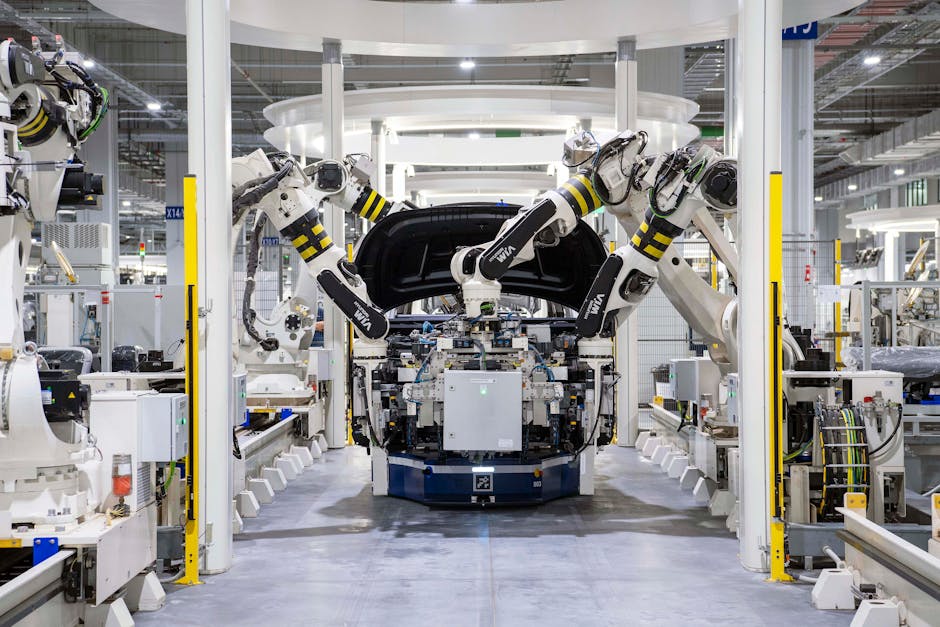
The organization's leadership recognized that incremental improvements would not bridge the performance gap and made the strategic decision to implement AI Agents for Smart Manufacturing across their highest-volume facility producing precision-machined components for electric vehicle powertrains. This 18-month implementation, completed in Q4 2025, provides valuable insights into both the technical approach and organizational change management required to successfully deploy autonomous manufacturing intelligence at enterprise scale. The results—a 34% improvement in OEE, 58% reduction in unplanned downtime, and 23% increase in first-pass yield—demonstrate the transformative potential when AI agents are thoughtfully integrated into complex production environments.
Initial State: Diagnosing the Performance Barriers
Before designing their agent architecture, the manufacturer conducted a comprehensive six-week operational assessment across all production lines, quality systems, and supply chain interfaces. This diagnostic phase revealed several critical constraints limiting performance. Their existing predictive maintenance system generated alerts based on simple threshold rules and calendar-based schedules, failing to account for actual equipment condition, production intensity variations, or the cascade effects of maintenance timing on downstream operations. Consequently, maintenance crews faced a constant stream of false positives while genuine equipment degradation often went undetected until failure.
Production scheduling presented equally significant challenges. Planners used sophisticated optimization software to generate weekly schedules, but these plans rapidly became obsolete as actual conditions diverged from assumptions. Equipment breakdowns, material delays, quality holds, and demand changes occurred daily, yet the organization lacked the capability to dynamically reoptimize schedules in response. Shop floor supervisors compensated through manual interventions, but their decisions necessarily focused on immediate priorities without full visibility into system-wide implications. This reactive approach generated frequent changeovers, suboptimal batch sizing, and underutilization of capacity during certain periods while creating bottlenecks during others.
Quality Management Limitations
Quality assurance followed a traditional inspection-based model with Statistical Process Control charts monitored by quality engineers. While this approach caught defects, it operated reactively rather than predictively. The organization collected extensive data from in-process sensors and coordinate measuring machines but lacked the analytical capability to identify subtle patterns indicating quality drift before defects materialized. This resulted in production runs that exceeded control limits, requiring costly rework or scrap, and occasionally shipping marginal parts that generated customer complaints and warranty issues.
Solution Architecture: Building Autonomous Manufacturing Operations
The implementation team, working with specialists in developing AI solutions, designed a multi-agent architecture addressing the three primary performance constraints. Rather than deploying a monolithic AI system, they created specialized agents with distinct responsibilities that collaborate through defined interfaces and shared data infrastructure. This modular approach enabled phased deployment, reduced implementation risk, and provided flexibility to refine individual agents without disrupting the entire system.
The predictive maintenance agent received real-time telemetry from 847 sensors across 43 critical production machines, including vibration monitors, thermal imaging systems, power consumption meters, and tool wear detectors. Rather than simple threshold monitoring, the agent employed ensemble models trained on 27 months of historical failure data, correlated with production intensity metrics, material characteristics, and environmental conditions. The agent's architecture incorporated both equipment-specific models capturing individual machine behavior and cross-equipment models identifying patterns affecting multiple assets. This enabled detection of systemic issues—such as hydraulic pressure fluctuations affecting an entire production cell—that single-asset monitoring would miss.
The production scheduling agent integrated with the existing MES while incorporating additional data streams from the ERP system, supplier delivery tracking, quality hold status, and real-time equipment availability from the predictive maintenance agent. Using reinforcement learning techniques, the agent continuously optimized production sequences to maximize throughput while minimizing changeover time, balancing inventory levels, and respecting delivery commitments. Unlike static weekly schedules, this agent regenerated optimal plans every four hours and triggered immediate replanning when significant disruptions occurred. The agent's objective function balanced multiple competing priorities: on-time delivery, equipment utilization, inventory carrying cost, and changeover minimization, with weights adjusted based on current business priorities.
Quality Intelligence Agent
The quality agent represented perhaps the most innovative component of the architecture. It received data from both in-process sensors measuring dimensional characteristics, surface finish, and material properties, as well as upstream variables including raw material batch properties, machine operating parameters, tool conditions, and environmental factors. By analyzing these multidimensional inputs, the agent identified subtle correlations between process conditions and quality outcomes that human engineers had never detected. For example, it discovered that a specific combination of cutting speed, coolant temperature, and tool wear on their CNC machining centers produced parts at the upper tolerance limit—technically acceptable but with reduced margin—and proactively adjusted parameters to center the process.
Implementation Journey: Phased Deployment and Organizational Change
The deployment followed a carefully structured sequence beginning with a single production line serving as the pilot environment. This approach allowed the team to validate agent performance, refine integration interfaces, and develop operational procedures before scaling to the full facility. The predictive maintenance agent deployed first in January 2025, operating initially in advisory mode where maintenance technicians reviewed and approved all recommendations before execution. This four-month supervised operation period built confidence among maintenance staff, generated validation data demonstrating prediction accuracy, and enabled calibration of confidence thresholds for autonomous operation.
During this phase, the agent identified 37 equipment conditions requiring maintenance intervention—of which 34 were subsequently validated by technicians as genuine issues requiring attention. Critically, the agent detected these conditions an average of 12 days before traditional monitoring systems would have triggered alerts, providing maintenance teams adequate time to plan interventions during scheduled downtime rather than responding to emergency breakdowns. By May 2025, with demonstrated reliability and growing user confidence, the agent transitioned to autonomous operation for high-confidence predictions while continuing to escalate ambiguous cases to human technicians.
The production scheduling agent followed in June 2025, initially operating in parallel with existing planning processes. Planners generated their conventional weekly schedules while the agent independently created alternative plans. For eight weeks, operations leadership compared both approaches across key metrics including predicted throughput, changeover frequency, and schedule adherence. The agent consistently produced schedules projecting 11-15% higher throughput with comparable or reduced changeover time, though some planners initially questioned whether these optimistic projections would hold under actual execution conditions.
Building Trust Through Transparency
A critical success factor was the decision to implement comprehensive explainability features within agent interfaces. Rather than presenting maintenance recommendations or schedule changes as black-box outputs, the system displayed the specific data patterns, model predictions, and confidence levels underlying each decision. Maintenance technicians could see exactly which sensor readings triggered maintenance alerts and review historical cases with similar patterns. Planners could understand why the agent prioritized specific production sequences based on visible trade-offs between competing objectives. This transparency transformed AI Agents for Smart Manufacturing from mysterious autonomous systems into collaborative tools that augmented rather than replaced human expertise.
Results and Performance Impact
Following full deployment across all production lines by September 2025, the facility measured performance across multiple dimensions through Q4 2025. Overall Equipment Effectiveness increased from the baseline 66% to 88.4%—a 34% relative improvement exceeding initial projections. This improvement decomposed into specific contributing factors that validated the multi-agent approach. Availability improved from 82% to 94.3% as unplanned downtime decreased by 58%, directly attributable to the predictive maintenance agent's ability to prevent unexpected failures. The average time between unplanned stops increased from 47 hours to 112 hours, while the duration of stops that did occur decreased by 35% because maintenance crews had better diagnostic information and appropriate parts pre-positioned.
Performance—the speed at which equipment runs relative to designed capacity—increased from 88% to 92.7%. This improvement resulted from the quality agent's optimization of process parameters that previously ran conservatively to ensure quality but inadvertently sacrificed throughput. By identifying the precise operating envelope that maximized speed while maintaining quality standards, the agent enabled production at higher rates without increased defect risk. Quality rates improved from 91% to 96.1% first-pass yield, reducing scrap costs by $1.8 million annually and eliminating customer quality complaints related to dimensional issues.
Production scheduling improvements manifested in inventory reduction and delivery performance gains. Work-in-process inventory declined by 41% as optimized sequencing reduced queue times and batch sizes. On-time delivery to customers improved from 87% to 98%, strengthening customer relationships and avoiding the expedite costs and premium freight charges that previously consumed approximately $340,000 monthly. Labor productivity increased by 19% as operators spent less time managing disruptions and more time on value-adding activities.
Financial Return and Strategic Value
The total investment including software licensing, integration services, infrastructure upgrades, and internal labor totaled $4.7 million over the 18-month implementation period. Annual operational benefits—calculated from downtime reduction, quality improvements, inventory carrying cost reduction, and labor productivity gains—reached $8.2 million, yielding a 14-month payback period and 174% first-year ROI. Beyond these direct financial returns, the organization gained strategic capabilities including the foundation for Digital Twin Intelligence that supports new product introduction planning, and the organizational expertise to deploy similar Smart Factory AI Integration initiatives at their remaining facilities.
Lessons Learned and Critical Success Factors
Reflecting on the implementation, leadership identified several factors that proved essential to success. The decision to begin with comprehensive data infrastructure work—including standardizing sensor data formats, implementing edge computing for latency-sensitive processing, and establishing a unified data lake—created the foundation enabling agent effectiveness. Organizations that attempt to deploy AI Agents for Smart Manufacturing before addressing data architecture inevitably encounter integration challenges that delay value realization and undermine stakeholder confidence.
The phased deployment approach with extended supervised operation periods proved crucial for building organizational trust and validating agent performance before autonomous operation. While this cautious approach extended the implementation timeline, it avoided the resistance and potential safety issues that can emerge when autonomous systems are deployed too aggressively. Maintenance technicians and production planners became agent advocates rather than skeptics because they observed performance firsthand during the supervised phases and developed confidence in agent capabilities and limitations.
Investing in explainability and human-agent interface design delivered returns far exceeding the development cost. The ability for operators, technicians, and planners to understand agent reasoning transformed these systems from threatening black boxes into valued collaborative tools. This transparency also accelerated troubleshooting when agents did make suboptimal decisions, enabling rapid identification of root causes—whether data quality issues, model limitations, or inappropriate objective function weights—and targeted corrections.
The multi-agent architecture with specialized, focused agents proved superior to alternative approaches using broader, more general-purpose systems. Each agent could be optimized for its specific domain, trained on relevant data, and refined based on targeted performance metrics. The defined interfaces between agents provided clear boundaries and integration points that simplified development, testing, and ongoing maintenance. This modularity also provides flexibility for future enhancements, enabling introduction of additional agents addressing supply chain optimization, energy management, or workforce allocation without disrupting existing autonomous operations.
Conclusion: Scaling the Model for Enterprise-Wide Transformation
This case study demonstrates that AI Agents for Smart Manufacturing, when implemented with appropriate technical architecture and organizational change management, can deliver transformative performance improvements in complex production environments. The 34% OEE improvement, 58% downtime reduction, and 23% quality enhancement achieved by this tier-1 supplier reflect not just technical capability but the successful integration of autonomous intelligence into human-operated manufacturing systems. The organization now plans to replicate this model at two additional facilities during 2026, with refinements based on lessons learned from the initial deployment. Their experience validates the potential for autonomous manufacturing operations while highlighting the importance of data infrastructure, phased implementation, transparency, and human-agent collaboration in capturing that potential. As manufacturing enterprises increasingly adopt these capabilities, success will depend on recognizing that AI agents represent not just software deployments but fundamental transformations in how production systems operate—requiring sophisticated Context Engineering for AI approaches that ensure autonomous systems possess comprehensive operational understanding, clear objective alignment, and seamless integration with human expertise to drive sustained competitive advantage in the evolving landscape of smart manufacturing.


Comments
Post a Comment